
Critique Partners for Romance Writers: Finding and Keeping One
The old Writers' Desk plan never fully launched, but the idea behind it, writers trading honest notes on each other's chapters, is still the cheapest education in the genre.
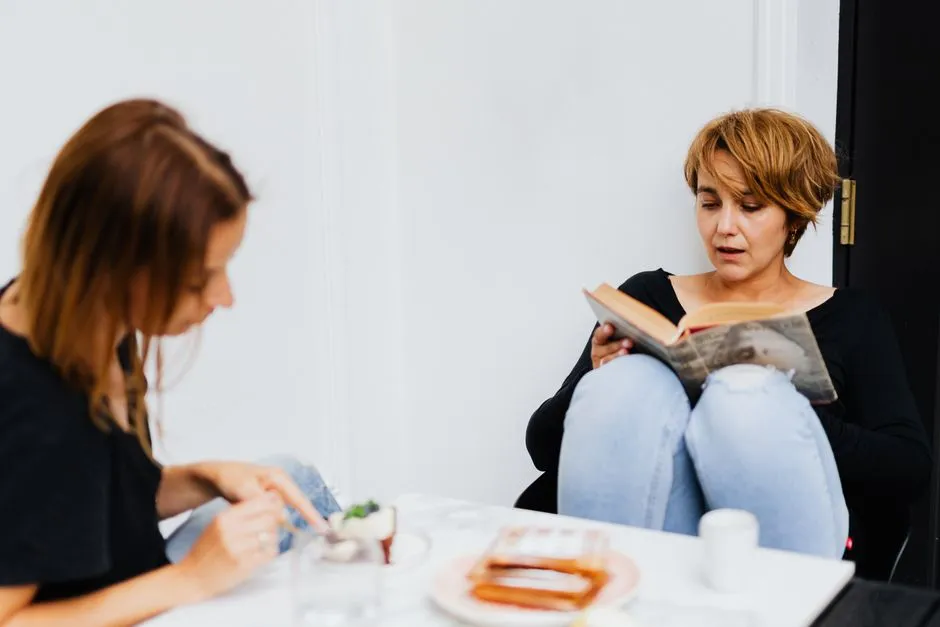
Picture a kitchen table in 2003, a printer that jams on every fourth page, and a woman with a red pen reading someone else’s chapter three at midnight because she promised she’d send notes by Friday. She doesn’t know the writer. They met on a message board two weeks ago. She has opinions about the hero’s motivation and is trying to work out how to say “he reads like a wardrobe with abs” kindly.
That was the dream behind the Writers’ Desk.
When I started going through the old site files for the restored archive, one of the documents I kept returning to was the plan for a members’ workshop. The idea, as the site described it in 2003, was simple: writers would submit their manuscripts, and other members would review and rate them, the same way readers here were already reviewing and rating published books on a scale of one to ten. The site’s navigation also carried a “Critique Buddy” button, which I take to have been meant for pairing writers. The plan called for a beta version at ten dollars a month, membership limited to adults over eighteen because of the adult content found in most romances, and a rule that anyone submitting erotica had to state clearly that the material was graphic.
As far as I can tell from the archive, the Desk never grew into the full service the founders sketched; in the summer of 2003 the page still said it was not open yet. Writers who wanted partners had to find them some other way, as most of us still do. This piece is what I’ve learned from my own swaps.
Why romance writers need partners more than most
Romance is a genre with a contract. Readers expect certain beats, and they expect the emotional payoff to be earned. You can’t see whether you’ve earned it from inside your own head, because you already know how much your heroine is hurting. A partner who reads romance can tell you that the hurt isn’t on the page.
A romance critique partner also catches genre-specific problems that a general writing group misses. My first workshop was a mixed group at a community college, and the most useful note I got on my love scenes was “this is a bit much.” The least useful note was the same sentence from someone else, who meant the opposite. A romance reader would have told me that the scene came too early, before the reader trusted the hero, and that was the actual problem.
What to swap, and how often
The best arrangements I’ve seen were boringly regular. Two writers, roughly the same pace, swapping a fixed amount on a fixed schedule.
| Arrangement | Works well for | Watch out for |
|---|---|---|
| One chapter a week each | Drafting writers who need momentum | Notes on early chapters going stale once the plot changes |
| A full act (about a third of the book) every month or two | Writers who revise in big passes | Long gaps where one partner loses interest |
| Whole manuscript, once | A finished draft heading to agents or editors | Partner fatigue; a full read is a big favour |
| Synopsis and first three chapters | Contest entries and submission packets | Polishing the opening while the middle is broken |
Agree on the unit before you start, and on the turnaround. “I’ll send notes within ten days” is a promise you can keep. “I’ll get to it soon” is how partnerships die.
Match pace if you can. A writer who finishes two books a year and a writer who finishes one every three years will both be frustrated. The fast one feels held back. The slow one feels like a reading service.
Match subgenre loosely. You don’t need to write in the same subgenre, and a Regency writer paired with a romantic suspense writer can be a good pairing, because each catches the other’s habits. You do need someone who reads romance and likes it. A partner who thinks the genre is beneath them will spend every note trying to turn your book into a literary novel.
Chapter-swap etiquette
Most of this is common courtesy, but people forget it when they’re anxious about their own pages.
Say what kind of read you want. Early draft: “big picture only, don’t line edit.” Late draft: “I need the commas too.” If you don’t say, your partner will guess, and they’ll guess wrong half the time.
Send clean files. Formatted, page-numbered, spell-checked. Your partner’s time goes to your story, not to fixing your tab key.
Don’t explain the chapter before they read it. If you have to tell them what the scene means, the scene isn’t doing it yet. Let them read cold and report what they got.
Read the notes twice before replying. Once to feel the sting, once to see what’s useful. Reply to say thank you and to ask questions. Never reply to argue. If a note is wrong, ignore it quietly.
Keep it private. Unpublished work stays between the two of you. No sharing chapters with your other writing friends, no quoting a partner’s clumsy line in a forum post for laughs. The 2003 plan restricted the Desk to adult members because of the content, and the same caution applies to privacy: people trust each other with work that is raw, personal and sometimes explicit.
Notes on the love scenes without making it weird
This is the part new partners dread, and it’s simpler than it feels.
Treat a love scene as a scene. It has a POV character, a goal, an obstacle and a change. The questions you’d ask about a fight or an argument apply. Does the scene move the relationship? Does the reader learn something new about either character? Is the POV character’s emotional state clear? Does the pacing hold?
A few habits keep it professional:
- Talk about the characters, never about the writer. “She seems detached here” lands differently from “you seem uncomfortable writing this.”
- Comment on choreography only when it’s confusing. If you lost track of whose hand is where, say so plainly, the same as you would in an action scene.
- Flag heat-level mismatches against the book’s own promise. A sweet small-town romance that suddenly turns explicit in chapter twelve is a craft problem whatever your personal taste.
- If a scene doesn’t work for you because of content you don’t read, say that up front and suggest they get a second opinion. Your discomfort is real information about you, and only partly about the scene.
The old plan’s rule that erotica had to be flagged makes sense to me even now. Agree at the start what heat levels each of you writes, and warn your partner if a chapter goes past what they signed up for.
Critique partners, beta readers and paid editors
Writers mix these three up, and each one does a different job.
A critique partner is a fellow writer in an ongoing swap. They read your work in progress, often repeatedly, and you read theirs. Their notes are craft notes: structure, character, scene goals, prose. The relationship is reciprocal and long-term.
A beta reader is a reader, not necessarily a writer, who reads a finished or near-finished draft once and tells you how it felt. They’re your test audience. “I got bored around the wedding” is a perfect beta note. They don’t need to know why; that’s your job. Good betas for romance are people who read thirty or forty books a year in your subgenre and can tell you when your hero sounds like everyone else’s.
A paid editor is a professional you hire for a specific service: developmental edit (structure and story), line edit (sentence level) or copyedit (correctness). For writers going to traditional publishers, the publisher supplies editing after the sale, so most never hire one. For self-published authors, a good developmental editor can be worth every dollar. A bad one can cost you several hundred dollars and give you notes your critique partner would have given you for free.
The order I’d suggest: critique partner during drafting and revision, betas when you think it’s done, an editor if you’re self-publishing or if you’ve revised and still can’t see the problem.
There’s a stretch before any of that, though. You’ve finished a draft, nobody you know writes romance, and the message boards feel like shouting into a well. During that gap I’d still look for structured feedback rather than waiting months for the right person. A craft book with exercises can help, and so can a contest that returns judges’ score sheets, or a single paid manuscript assessment that tells you where the scene goals and pacing slip on your own pages. None of these replaces a partner who knows your book. They keep you revising while you look for one.
Where to find a partner now
The Yahoo groups and our old book clubs are gone, but the places that work are similar in spirit.
Local chapters of writers’ organisations are still worth asking. Romance Writers of America, founded in Houston in 1980, had more than 150 chapters by 2007, though it filed for Chapter 11 bankruptcy in 2024 and membership has fallen sharply, so check whether a chapter near you still meets. Romance-focused online communities often have a partner-finding thread. Writing contests that return detailed judges’ feedback put you in contact with other entrants. Libraries sometimes host genre writing groups. Reading the reader reviews in your subgenre and noticing which reviewers write thoughtful, specific criticism can point you to people worth approaching, if they write too.
Start with a trial. Swap one chapter each. Read the notes you get, and pay attention to how the other person receives yours. If both of you come away with something useful and nobody sulked, try a second round.
Red flags
Some partnerships fail slowly. These are the signs I’d act on early:
- Notes that rewrite your book into theirs. If every comment pushes your sweet contemporary toward their dark paranormal voice, they’re editing their own taste onto your pages.
- No negatives, ever. A partner who loves everything is pleasant company and useless as a reader.
- Cruelty dressed as honesty. “I’m just being blunt” is often an excuse. Good critique can be blunt and kind at once.
- Lopsided effort. You send six pages of notes; they send “liked it, a few typos.” Once is a bad week. Three times is a pattern.
- Secrecy about their own work. A partner who wants your chapters but keeps finding reasons not to send theirs isn’t in a swap.
- Competition. If your good news makes them cold, the partnership won’t survive your first sale.
Ending it is allowed. Say thank you, say your schedule or direction has changed, and wish them well. No need for a post-mortem.
A sample critique letter
Line notes go in the manuscript margins. The letter is where you give the big picture. Here’s a lightly fictionalised version of one I wrote for a historical romance swap a few years ago. The writer gave permission, and I’ve changed the names.
Dear Miriam,
Thanks for chapters one through six of The Smuggler’s Wife. I read them over two evenings and wanted to keep going, which is the first thing I’d tell you if you only read one line of this.
What’s working. Hester’s voice is sharp from the first page. The scene in chapter two where she counts the coins twice and still comes up a shilling short told me more about her situation than the backstory in chapter one did. The Cornish setting feels lived-in: the tide tables, the chapel, the way the village goes quiet when the excise men ride through.
The big question. I don’t yet understand why Hester can’t simply refuse to shelter Gideon. The threat to her brother is mentioned in chapter one and then disappears until chapter five. Without it on the page, her choice to hide a stranger looks reckless rather than forced, and I started to doubt her intelligence, which I don’t think you want. Could the brother appear, or be referred to, in chapter three?
Gideon. He’s attractive, and I like the scene with the dog. His POV chapters sound a lot like hers, though. Same sentence rhythms, same dry asides. I’d love to hear something in his head that only he would think.
The kiss in chapter six. It’s a lovely scene. I think it comes about a chapter too early, before she has any reason to trust him. If you held it until after the cliff path scene, the kiss would be her choosing to trust him, and that would raise the stakes for the betrayal I suspect is coming.
Small things. Margin notes on a few word choices that felt modern (“okay” on page 43, “focus” on page 61). Tea prices in the shop scene look high for the period, but check me on that.
I’m excited to see where this goes. Send seven through twelve whenever you’re ready, and I’ll have my next three chapters to you by the fifteenth.
Warmly, R.
Notice the order: what works, the biggest problem with a suggested fix, secondary issues, small things, a closing that keeps the swap going. Notice too what’s missing. There’s no rewriting of her sentences in the letter and no instruction about what she must do. The notes are questions and observations. The book stays hers.
If you want practice writing this kind of criticism, writing reviews of published books is excellent training. Our reviewer guidelines and the piece on how to write a romance review cover the same muscle from the reader’s side: say what you felt, then say what on the page made you feel it.
Keeping a partner for years
The longest swap I have been part of ran on one rule: every set of notes had to include one thing the reader would remember about the chapter. Some weeks it was a line of dialogue. Some weeks it was “the moment he picks up her glove.” The rule kept both of us reading for what worked, not only for what was broken.
I’d add that partners need to celebrate the dull milestones too. A finished draft. A revision sent. A rejection with a personal note. In this genre the wins are spread thin, and a partner who notices them is worth more than one who catches every comma.
If you’re plotting the book you’ll eventually swap, the companion piece on plotting a romance novel gives you a structure to check your partner’s notes against. And if you’re new here and wondering how reviews, ratings and communities worked on the original site, how it works explains the machinery that the Writers’ Desk was meant to plug into.
Sources and further reading
- The 2003 Writers’ Desk plan, with members reviewing and rating submitted work, a $10 monthly fee for the beta version, the over-18 rule and the requirement to flag graphic erotica: the site’s How It Works page, archived August 2003.
- Romance Writers of America’s founding in Houston in 1980, its 150-plus chapters as of 2007 and its Chapter 11 filing in May 2024: Wikipedia, Romance Writers of America.
- The beta reader as a test reader who reads as an average reader would, as distinct from a critique partner who reads as an author: Wikipedia, Beta reader.